
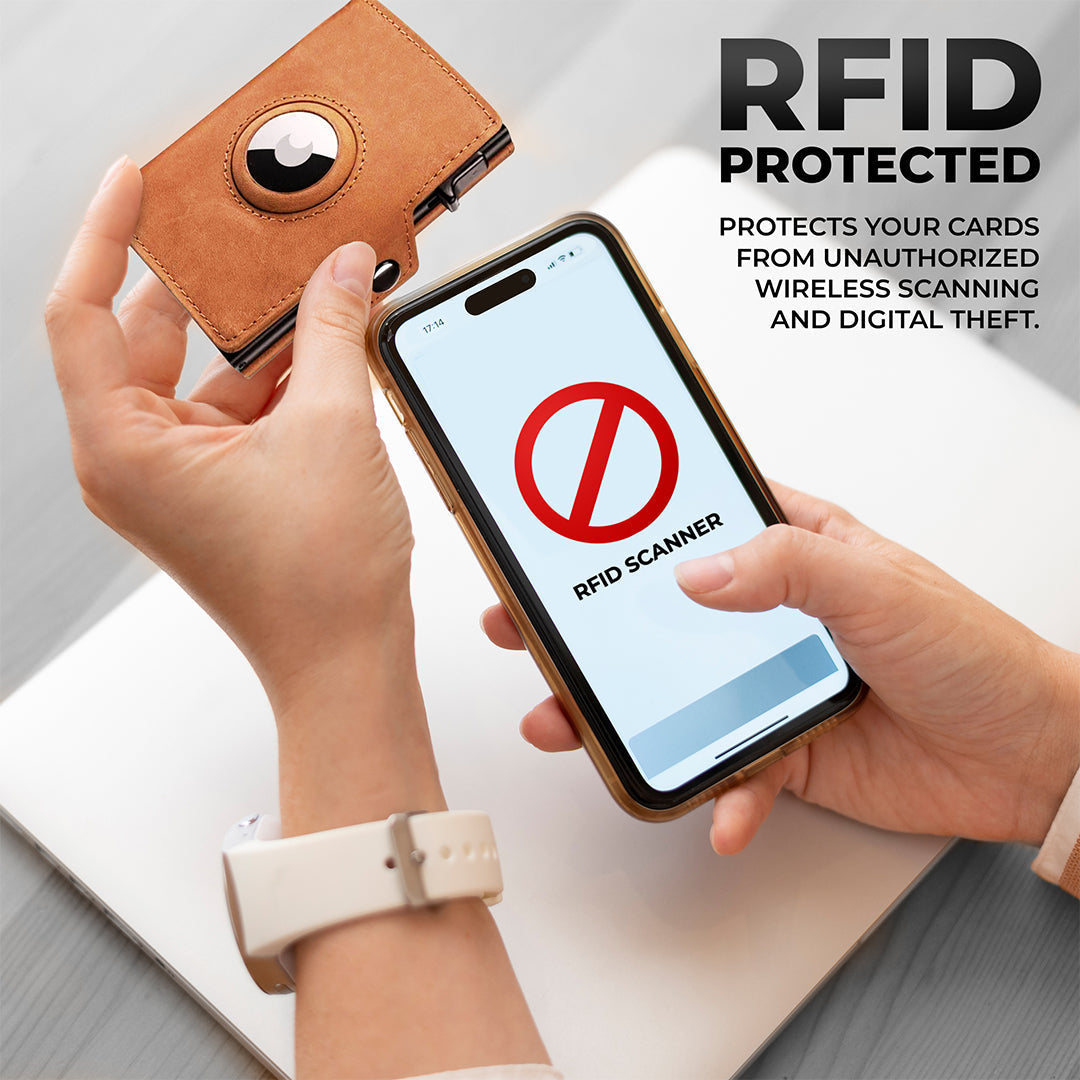
RFID-blocking wallets are common now.
But what do they actually do — and how do they work?
Let’s break it down.
What is RFID?
RFID stands for Radio Frequency Identification.
It’s the technology behind “tap to pay” credit cards — quick, wireless, and widely used.
The concern is that these signals can, in certain situations, be read by nearby scanning devices without physical contact.
How RFID-blocking wallets work
RFID-blocking wallets use a special lining (often metal-infused materials) that helps disrupt radio signals.
You can think of it like a barrier layer — it reduces the ability of external scanners to read card data when the wallet is closed.
Do you need it?
If your card has a wireless or contactless payment symbol, RFID protection is something many people choose to include in their everyday carry.
It can be especially useful in crowded public environments.
RFID blocking doesn’t change how you use your wallet day to day.
But it adds a layer of protection for situations you don’t control.




Leave a comment
All comments are moderated before being published.
This site is protected by hCaptcha and the hCaptcha Privacy Policy and Terms of Service apply.